
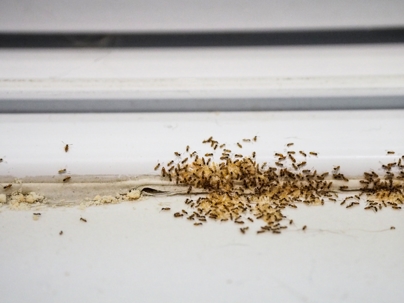
An ant trail that returns after you clean the counter or spray the visible insects is a sign that the foragers weren’t the whole problem. The trail is simply the part of the colony you can see. Stopping ants from invading your Stockton home starts with removing what draws them inside and interrupting their route back to the nest.
Dry weather, moisture around the home, and small structural gaps can turn outdoor ant activity into persistent indoor trails. An effective response depends on recognizing the ants’ likely source, removing food and water, and choosing methods that reach beyond the visible workers.
Common Ants Found Around Stockton Homes
Several ant species can become household pests in California. Their size, color, and nesting clues can guide your response, but a photo or inspection is needed to confirm the species.
Argentine Ants
Argentine ants are the most common ants around California houses and gardens. They’re dull brown, about 1/8 inch long, and often travel in heavy trails toward sweets, though they also feed on protein. Their large colonies can send many workers through the same opening, which is why a kitchen trail can seem to reappear overnight.
Odorous House Ants
Odorous house ants are small and dark, and they produce a rotten-coconut smell when crushed. They usually nest outdoors but enter homes in search of food or water.
Carpenter Ants
Carpenter ants are much larger, ranging from about 1/4 to 1/2 inch, and are black or red and black. They don’t eat wood, but they excavate nesting galleries in damp or damaged wood. Sawdust-like frass near a door frame, window frame, fence post, stump, firewood pile, or wall warrants attention.
Pharaoh, Pavement & Southern Fire Ants
Pavement ants often nest beneath hardscape and enter through foundation cracks. Pharaoh ants are tiny, yellow to honey-colored ants that nest in wall or cabinet voids, behind baseboards, or in insulation. Repellent products can cause disturbed pharaoh ant colonies to split into smaller colonies. Southern fire ants are another outdoor-nesting species that can become a household pest.
Why Ants Come Indoors
Most household ants live outside. Indoor activity usually begins when a scout finds an opening and discovers food or water worth returning for.
The scout leaves a pheromone trail, a chemical scent that other ants follow. The line along a counter edge, baseboard, pipe, or window can then grow quickly. Removing the visible ants matters, but finding the route and resource behind the trail matters more.
Ants commonly travel along wires, pipes, and other structural features. Utility penetrations, cracks around windows, gaps under doors, and openings where siding or trim meets the foundation can lead them indoors. During hot, dry conditions, colonies also search more actively for water, making leaky faucets, irrigation overspray, and damp areas near the house especially attractive.
Remove Food, Water & Entry Routes
The most useful DIY work addresses the conditions ants need rather than only the ants in view. Begin with this practical checklist:
- Wipe counters, floors, and appliance edges to remove crumbs, sticky residue, and spills.
- Store pantry foods in sealed containers and avoid leaving pet food out overnight.
- Vacuum or wipe active trails with soapy water to remove the pheromone trail.
- Repair dripping faucets and direct sprinkler spray away from the foundation.
- Caulk cracks around pipes, wires, windows, and other visible exterior openings.
- Trim branches and shrubs away from the structure so they don’t form bridges to the house.
- Keep mulch, leaf litter, grass, and irrigation water several inches away from the foundation.
Before cleaning a trail, note where it begins and ends. Ants emerging beneath a sink point to plumbing penetrations or a moisture source, while activity around a window can indicate gaps in the frame or vegetation touching the exterior.
Soapy water removes the trail that other workers follow. Vinegar, cinnamon, coffee grounds, and essential oils are often promoted as ant remedies, but they don’t replace moisture control, food cleanup, exclusion work, or colony-focused treatment.
Why Sprays Often Fail to Reach the Colony
Spraying visible ants kills exposed workers, not necessarily the queens or other colony members in the nest. Foundation sprays also don’t provide permanent control. They can temporarily reduce foraging, but a surviving colony can rebuild or find another route. In some cases, a barrier treatment traps ants indoors.
Slow-acting bait works differently. Workers carry it to the nest and share it with other colony members. Because the bait must act slowly enough for workers to return to the colony, a visible reduction can take several weeks.
Outdoor baiting is generally preferred because indoor bait can draw more ants into the home. Indoor baiting has a narrower role when a serious infestation makes entry points impossible to locate. For persistent activity, the important question isn’t which spray kills ants fastest, but whether the treatment reaches the colony without driving it to relocate.
When to Call a Professional
DIY prevention is worthwhile when you can identify the food or water source and seal the likely access point. Consider professional treatment when activity continues after one to two weeks of cleanup and exclusion work, trails can’t be traced to an entry point, or ants repeatedly appear in several rooms.
Carpenter ant signs also warrant an inspection. Look for frass, moisture-damaged wood, hollow-sounding trim or framing, or large ants emerging around windows, doors, or walls. These clues don’t confirm structural damage on their own, but they call for a closer look at the wood and nest location.
When hiring a pest control company, ask whether the plan uses bait and targeted spot treatments rather than repeated perimeter or monthly spraying alone. The inspection should identify the ant, locate likely entry areas, and address the conditions allowing the colony to persist.
Prevention blocks another route into your home, while treatment addresses the colony already using it. For help with ant control in Stockton and throughout San Joaquin County, Pest Pros Pest Solutions begins with inspection and species identification, then uses targeted slow-acting bait and low-impact exterior treatment at entry areas; when carpenter ants are involved, we treat within walls or wood structures as needed and recommend sealing cracks and correcting moisture conditions.
To have Pest Pros Pest Solutions assess the activity and recommend the next step, call Pest Pros Pest Solutions at (916) 588-9345.